

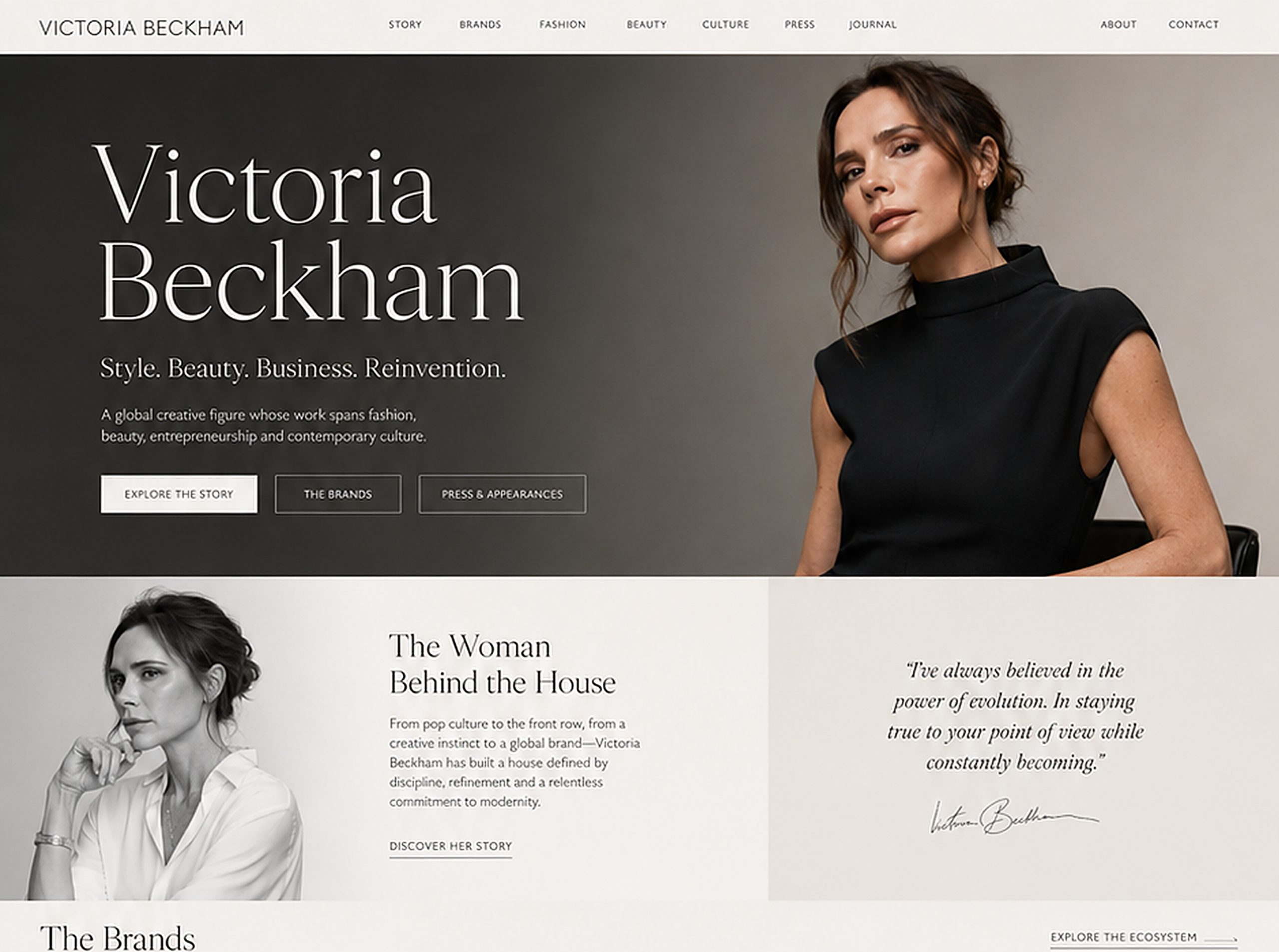
01 · Victoria Beckham: digital architecture for a personal brand evolved into an international powerhouse
Victoria Beckham is not just a fashion brand. She is a public figure, an entrepreneur, a creative director, a fashion and beauty house, and a particularly interesting case of strategic reinvention.
In this conceptual exercise, we explore how her digital ecosystem could be structured across two complementary levels: a main website designed to organise her story, vision and authority as a global personal brand; and an evolution of the fashion website to strengthen the ecommerce experience, editorial narrative and luxury positioning.
The goal was not to design a beautiful website. It was to think about the role each digital piece should play within a complex, recognisable and growing brand.
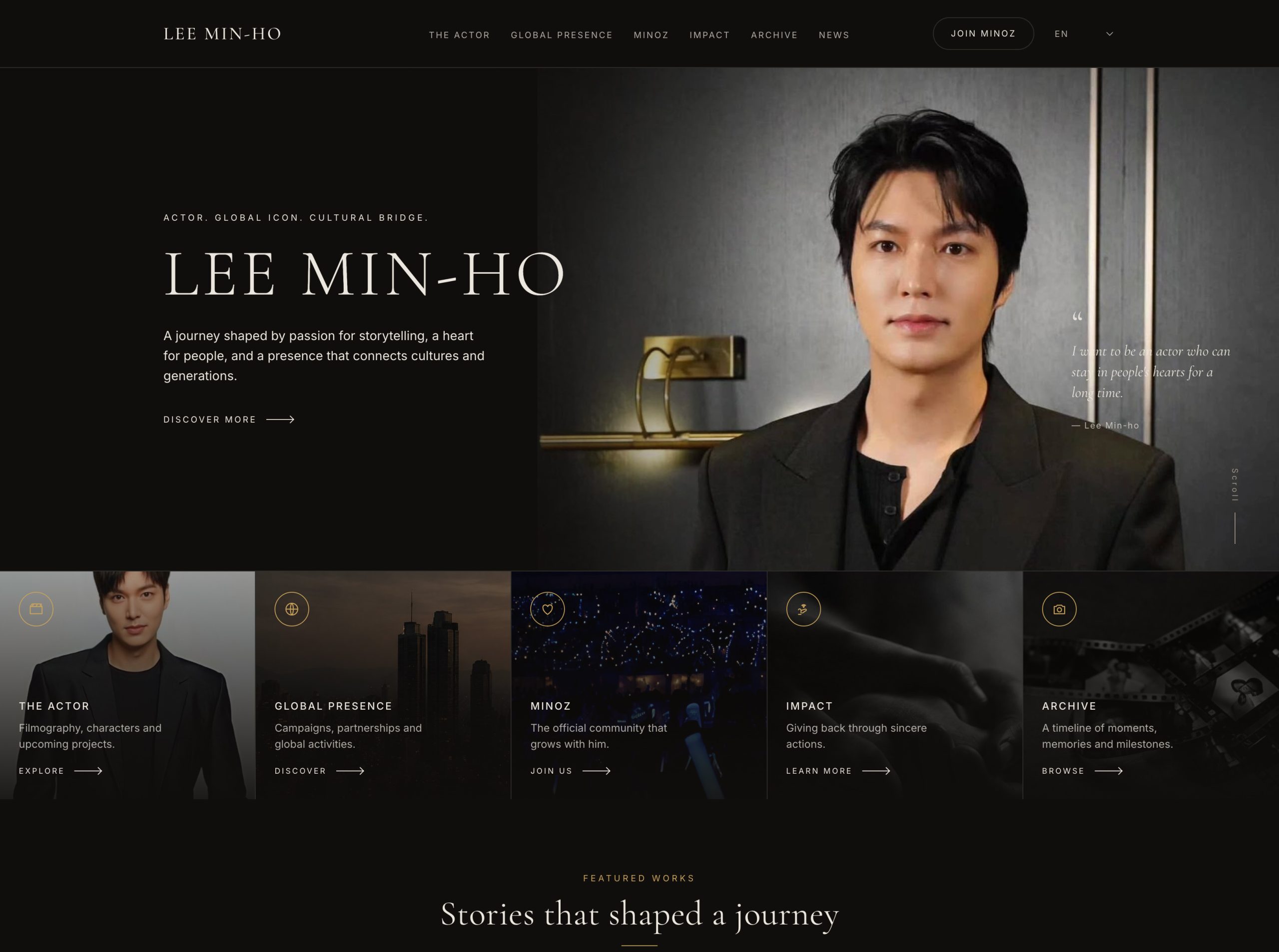
02 · Lee Min-ho: a digital presence for a global star at the intersection of cinema, culture and fandom
Lee Min-ho is not just an actor with international recognition. He is a global screen presence, one of the most recognisable faces of Hallyu, and the centre of a highly active fan community that connects entertainment, culture, fashion and social impact.
In this conceptual exercise, we explore how his official digital presence could evolve from a functional website for news, fan club updates and content into a more cinematic and strategic brand platform: a place capable of organising his career, global presence, fandom, archive, partnerships and PROMIZ-related impact in a clearer and more contemporary way.
The goal was not to create more visibility. It was to design a digital experience that helps audiences understand the scale, emotional value and cultural position that Lee Min-ho already holds.
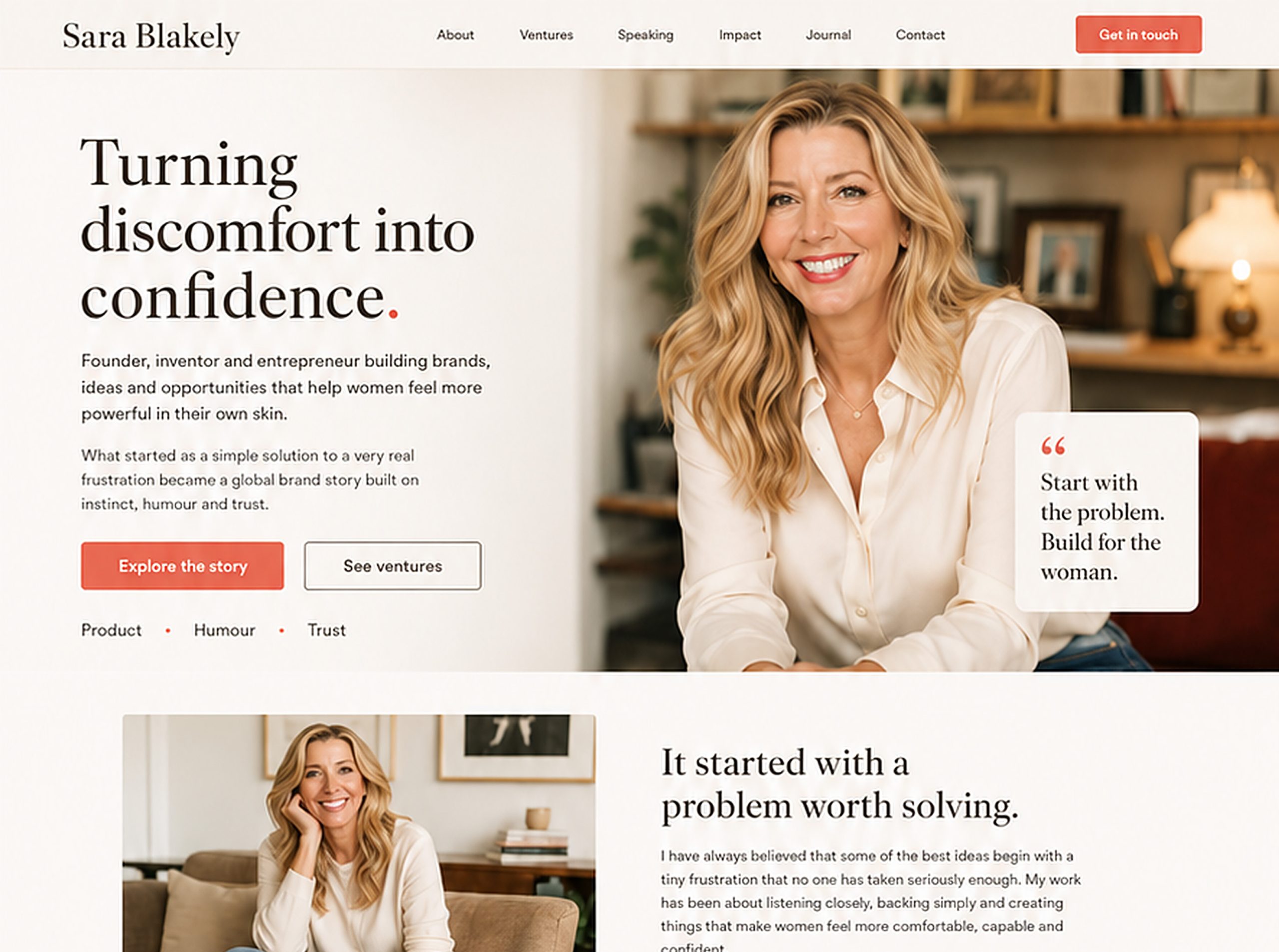
03 · Sara Blakely: personal brand, product and trust for a founder turned global reference
Sara Blakely is not just the founder of an iconic brand. She is an entrepreneur, inventor, communicator with a highly recognisable voice and a particularly interesting case of how everyday discomfort can become product, story and trust.
In this conceptual exercise, we explore how a digital presence could organise her founder ecosystem: the origin story, the evolution of her brands, her business authority, her approachable tone and her ability to turn personal experience into a platform of trust.
The goal was not to tell another inspiring entrepreneurship story. It was to design a digital experience capable of showing why product, humour and authority work better when they build the same perception.
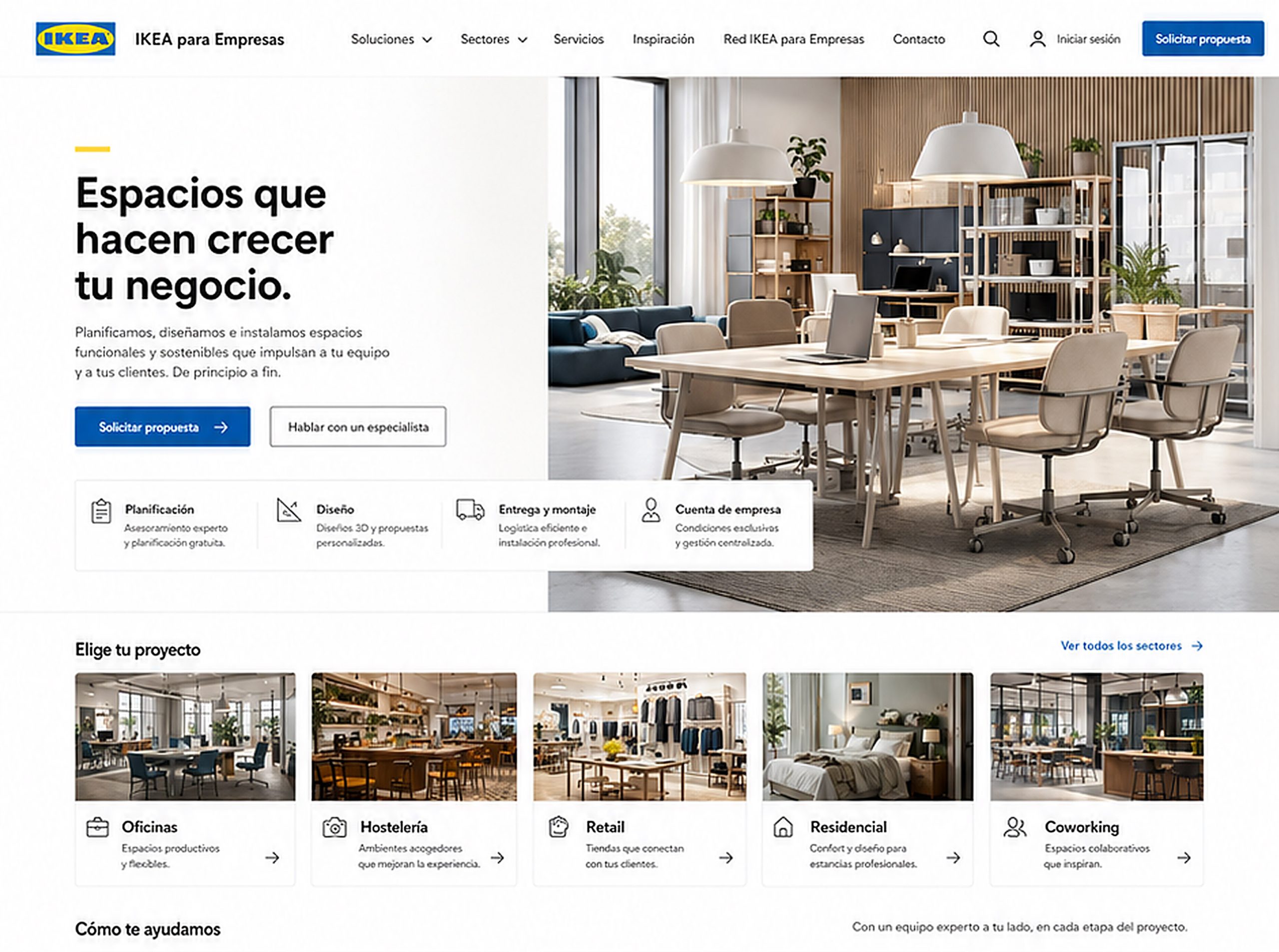
04 · IKEA Business: from catalogue to project platform, turning a B2B section into a professional digital experience
IKEA Business already benefits from enormous recognition: brand, catalogue, services, inspiration, the IKEA Business Network and a highly accessible proposition for companies that need to furnish or transform their spaces.
But the conceptual challenge was not to “make a nice IKEA page”. It was to imagine how its B2B digital presence could evolve to better serve companies, purchasing managers, interior designers, offices, hotels, retailers, coworking spaces and professional projects that are not just looking to buy furniture, but to solve an entire space.
In this conceptual exercise, we propose a homepage that is more oriented towards projects, services and professional decision-making. An experience that keeps IKEA’s visual DNA, but reorganises it through a more B2B logic: sectors, planning, design, project management, delivery, assembly, financing, business accounts and expert support.
05 · Typeform: from sign-up to first value, turning intent, creation and data into real activation
Typeform is not just a tool for creating forms. It is a platform that has turned a traditionally functional category into a more human, visual and conversational experience.
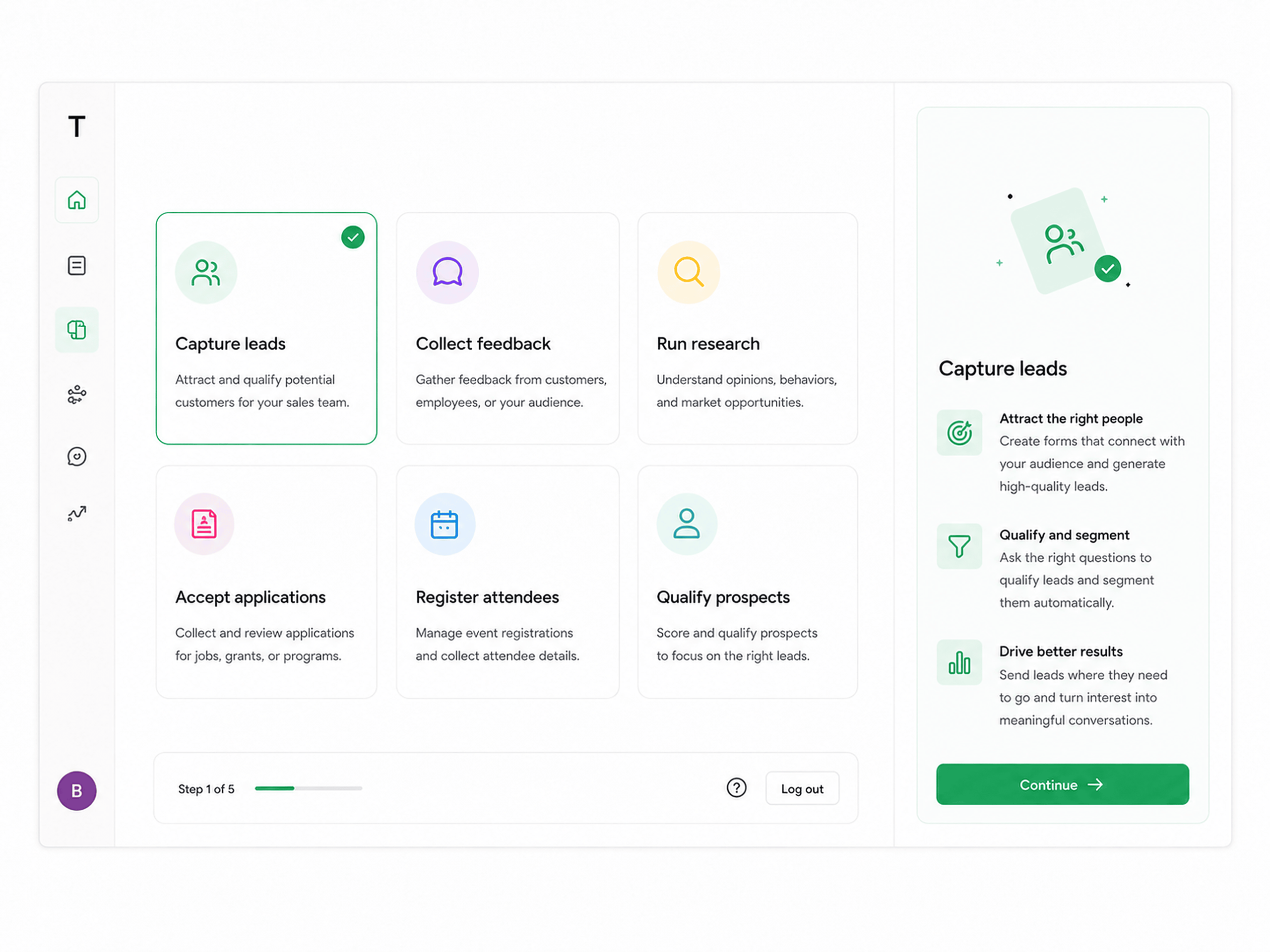
In this conceptual exercise, we do not approach Typeform as a website or identity redesign. The focus is elsewhere: the moment after sign-up, when the user enters the product for the first time and needs to turn an intention into a useful first experience.
The proposal explores how goal-first onboarding could reduce the distance between “I want to try it” and “I have a published, connected and measurable form”. A journey that starts from the user’s goal, proposes a guided path, creates a publishable first version, suggests integrations and helps interpret the first results.
The goal was not to make Typeform look better. It was to analyse how a product experience can accelerate activation, reduce friction and turn questions, responses and data into real business value.
06 · Hilti for Business: from tool supplier to operational platform for professional teams
Hilti is more than a professional tool brand. It is also an ecosystem of products, services, software, maintenance, fleet management, asset tracking, technical support and solutions designed to keep jobsites and teams operating.
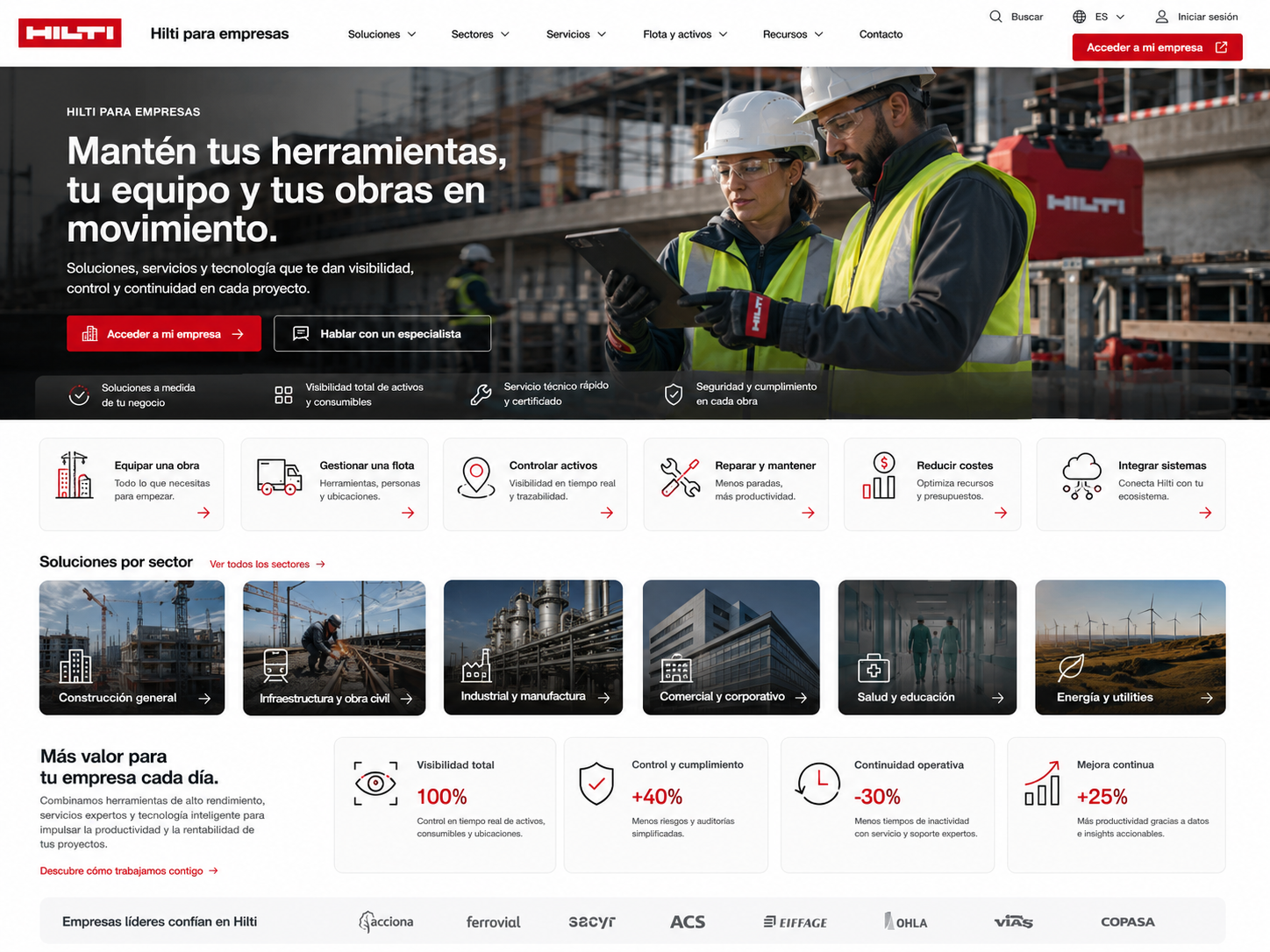
This conceptual case study does not propose a redesign of Hilti as a whole or the replacement of platforms such as ON!Track or Tool Fleet Management. It focuses on a different opportunity: a dedicated business vertical connecting the catalogue, assets, contracts, repairs, people, locations, jobsites and data within one continuous operational experience.
The concept explores a B2B entry point organised around business needs, sectors and company types, together with a private workspace for managing fleets, reviewing asset status, anticipating inspections, initiating repairs and understanding which issues may affect operational continuity.
The goal was not to design a larger tool store. It was to explore how Hilti could operate digitally as a platform that helps businesses keep tools, teams and jobsites moving with greater visibility, control and decision-making confidence.
07 · Correos Business: from order to return, a digital architecture built around the operation
Correos Business already offers far more than transport: ecommerce solutions, integrations, marketplaces, logistics, delivery options, returns and services that can support different stages of an order lifecycle.
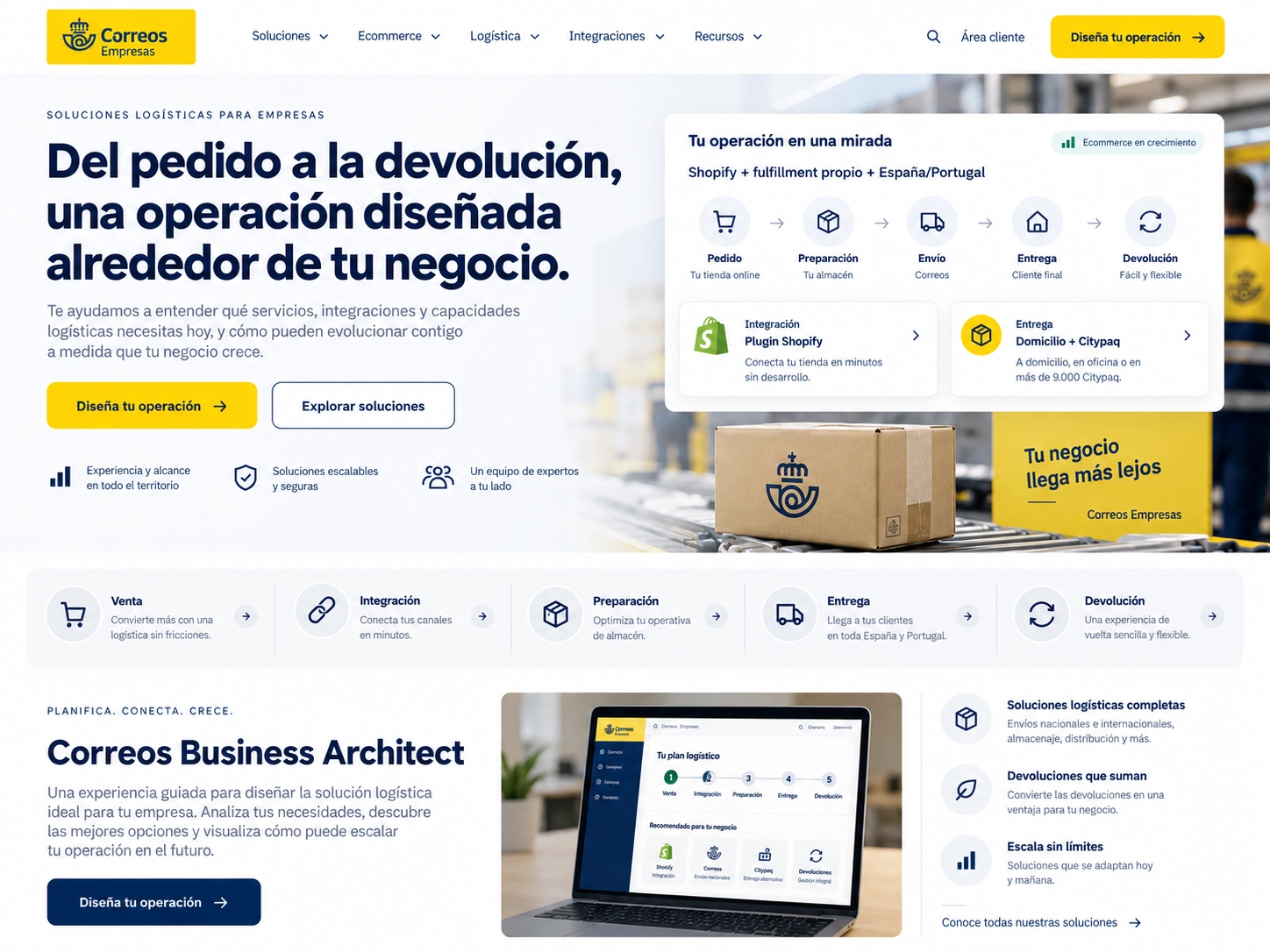
In this conceptual exercise, we explore how an additional guidance layer could begin with the customer’s actual operation — channels, volume, inventory, fulfilment, markets, delivery and returns — and translate that context into a clear logistics architecture, connecting services, requirements and integrations without expecting the business to understand the entire portfolio first.
The objective was not to add more solutions. It was to explore how Correos could help each business understand what it needs today, how to activate it and how that architecture might evolve as the operation grows.
Let’s build your next digital system
Tell us what you need to build, improve or connect. We help turn websites, platforms, ecommerce, integrations and digital processes into clear, functional solutions designed to grow.